A clear comparison of Surefoot ground anchors and traditional concrete footings—ideal for temporary installs, sensitive sites, and faster timelines.
When people think about shade structures, they often focus on the canopy, the fabric, or the architectural look. But the foundation system is just as important. It determines how quickly a structure can be installed, how much disruption is caused on site, and how easily the area can be restored later. That’s where low-impact foundation systems like Surefoot ground anchors can offer major practical advantages over traditional concrete footings—particularly for temporary or semi-permanent shade installations.
Concrete is a proven foundation method, but it comes with a process. Excavation, spoil removal, formwork, reinforcement, delivery scheduling, and curing time can extend project timelines and increase site disruption. On busy sites—schools, councils, public spaces, and commercial venues—this can mean more downtime, more restricted areas, and more coordination with multiple trades. It can also introduce weather-related delays when holes fill with water or curing conditions are affected.
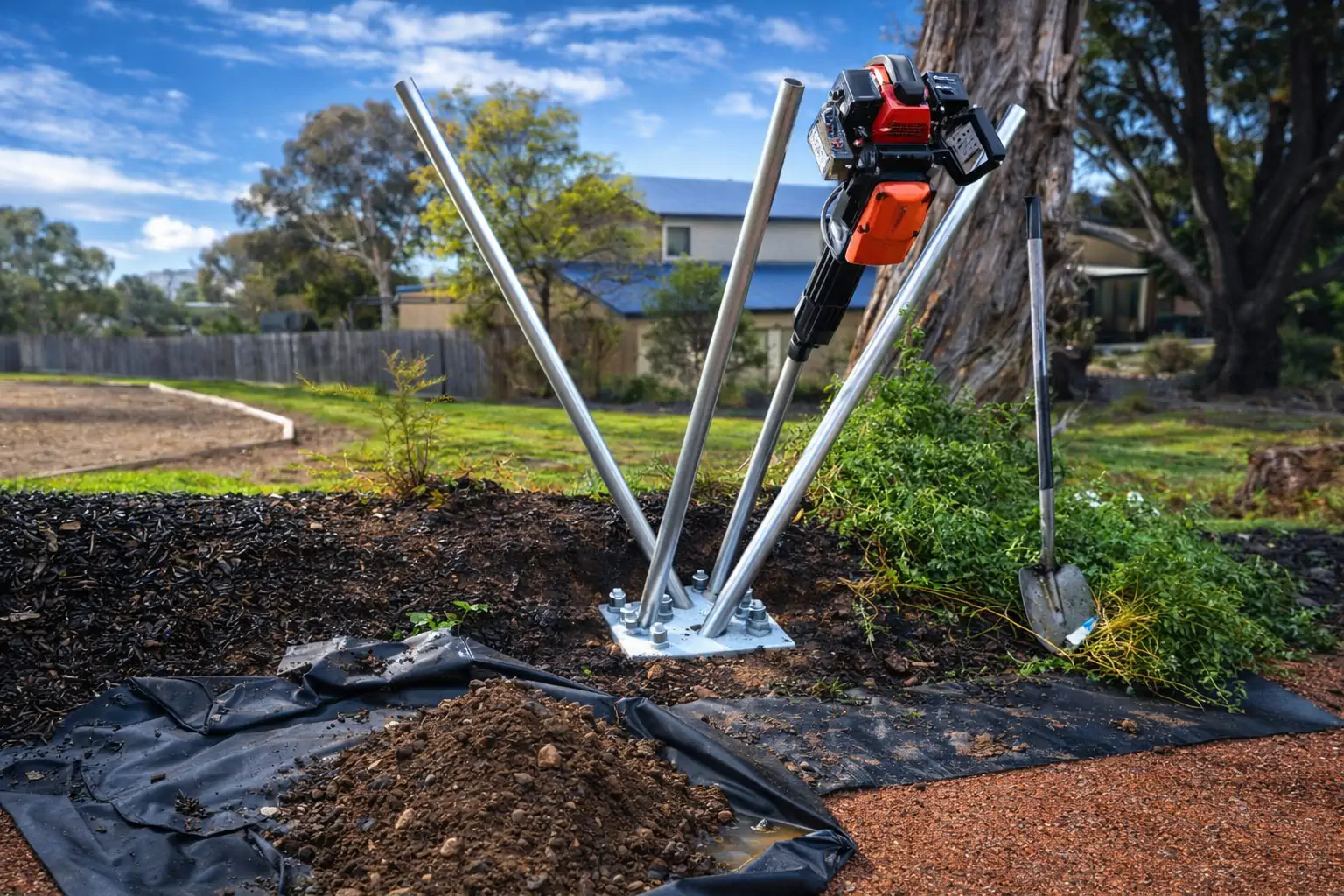
A ground anchor system uses engineered steel anchors that are mechanically driven into the ground and fixed to a base plate. The shade posts or structural elements are then connected to that plate. This approach can reduce excavation, minimise concrete use, and shorten installation time. It’s especially valuable when the site needs to remain functional, when the ground surface must be preserved, or when the structure may be removed or repositioned in the future.
Many sites have constraints that make concrete less desirable. Heritage areas, landscaped grounds, event locations, and high-traffic public spaces often require a foundation solution that can be installed without permanently altering the site. Low-impact anchoring can also help when access for heavy machinery is limited or when the ground is difficult to excavate without damaging nearby infrastructure.
Because a low-impact foundation typically reduces excavation and wet trades, it can also reduce the number of steps required on site. Fewer trades, fewer deliveries, and less material handling can improve safety and reduce the management load for site supervisors. In many cases, foundations can reach bearing capacity immediately, allowing installation works to continue without waiting for curing time.
Concrete may still be the best option for certain long-term structures, specific soil conditions, or projects with strict engineering requirements that favour traditional footings. The key is choosing the foundation method that matches the project’s timeline, risk profile, and site sensitivity.
Surefoot-style ground anchor solutions are not just about speed. They’re about reducing disruption, preserving the site, and making shade installations more flexible. For temporary event structures, sensitive public spaces, or projects with tight timelines, a low-impact foundation system can be a smart, practical choice.